

Cortec® Highlights Corrosion Protection Strategies for Precast Concrete in Chloride-Exposed Environments
March 3, 2026
Cortec® is drawing renewed attention to the value of MCI® technology for concrete corrosion concerns—even in precast concrete where manufacturers and engineers naturally expect less cracking. This is because precast bridge segments, tilt-ups, pipes, floating docks, and other components are not immune to physical damage and cracking during transport or freeze-thaw cycles, opening a pathway for corrosion attack. The corrosive threat is even higher in environments where exposure to seawater, brine, or deicing salts is inevitable. Cortec® therefore reasons that enhancing durability through corrosion protection at the outset or during routine maintenance is a valid step toward maximizing the service life of precast concrete.

An Easy Add-In for Early Corrosion Prevention
Early prevention is typically the best cure in any part of life. In construction, precast manufacturers and engineers can start with the advantage on their side by adding MCI® admixtures to the mix at the batching plant or casting site. MCI®-2005 and MCI®-2005 NS are dosed at a consistently low rate independent of expected chloride thresholds. They do not negatively affect concrete properties and are extremely economical compared to other corrosion prevention strategies, such as thick concrete cover and epoxy-coated rebar. Dispersed throughout the mix, MCI® molecules are attracted to metal surfaces, where they form a protective layer that delays time to corrosion initiation and reduces the rate of corrosion (once started) at the rebar level. MCI® admixtures are an especially important consideration for specifying engineers working on projects in naturally harsh environments:
- Intake pipes for desalination
- Docks floating in seawater
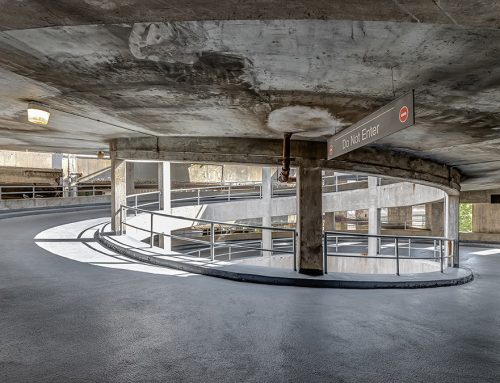
- Bridges and parking ramps exposed to deicing salts
In 2023, a contractor added MCI®-2005 to concrete floating docks that were already specified with galvanized steel reinforcement. A corrosion inhibitor was still required due to the concrete’s projected XF3 exposure class (European EN 206-1 standard). Testing showed that the MCI®-containing mix met requirements for both concrete properties (HRN EN 206-1) and compressive strength quality (HRN EN 12390-3). This simple solution helped the manufacturer comply with European exposure guidelines and gave them the confidence needed to rate the floating docks for 50 years of service in a seawater environment.*
Up Your Preventative Maintenance Game
Is it too late to use MCI® on precast bridge, parking ramp, and prefab structures that are already in place? No. Preventative maintenance is another preferred time to enhance corrosion protection on precast concrete. Routine application of a water repellent once every ten years is a well-known maintenance practice to impede moisture and chloride ingress, minimize corrosion damage, and prolong service life. Applying an MCI® surface applied corrosion inhibitor (SACI) in conjunction with a water repellent increases the value of this task by adding Migrating Corrosion Inhibitors to the concrete. While MCI®- 2020 can be applied right before the water repellent for an especially high concentration of MCI®, another option is to streamline application by using a two-in-one water repellent/SACI like MCI®-2018 for dual protection with one product application.
Protect Your Existing or Future Precast Structure
Precast concrete is a great option for simplified, modular construction with high-quality concrete mixes. However, it does not exclude the possibility of corrosion complications that may accompany physical damage or especially harsh environments. MCI® technology represents an excellent complementary strategy to help structural owners get the most out of their precast concrete by reducing the threat and progress of corrosion. To incorporate MCI® technologies into precast specifications or evaluate compatibility with performance requirements, engineers can visit cortecmci.com and contact Cortec’s MCI® technical team for design assistance.
*See Cortec® Case History #824. Login required: https://www.corteccasehistories.com/.
Keywords: Cortec, MCI, precast concrete corrosion, corrosion inhibitor admixture, chloride-induced corrosion, precast concrete durability, rebar corrosion prevention, surface applied corrosion inhibitor, freeze-thaw concrete damage, extend concrete service life
Need a High-Resolution Photo? Please Visit: www.cortecadvertising.com
For a PDF version please click here.