

At Cortec®, our sustainability efforts extend beyond energy use and recycling. In January 2021, Cortec® World Headquarters launched its organics recycling program to divert food and paper waste from the landfill and turn it into valuable soil supplement that can be used again and sold for retail.

In order to encourage Cortec® employees to participate in organics recycling, Cortec® World Headquarters purchases compostable plates and cutlery for use in the employee lunchroom and clearly identifies organics bins for food and paper towels throughout the building. These organics recycling bins are lined with Cortec's own certified compostable Eco Film® or Eco Works® bags made at our Cortec® Advanced Films plant in Cambridge, Minnesota. Compostable materials are collected and transported to Dakota Prairie Composting in Shakopee, Minnesota. At the Dakota Prairie facility, Cortec's organic wastes are blended with food scraps, compostable paper, and yard waste from other sources and decomposed under controlled conditions.
When waste enters the facility, it goes through six steps to go from organics waste to retail dirt and mulch.
Step 1. Waste is sorted and ground or shredded.
Step 2. Waste is mixed together based on contents to achieve the optimal nitrogen and carbon ratio.
Step 3. The waste is placed into an aerated static pile where air and humidity are controlled for 12 days.
Step 4. The compost is flipped and moved to a second pile where heat is introduced for 10 days.
Step 5. Piles of compost are moved over to windrows to cure for 45 days.
Step 6. The finished compost is sorted by size and type to be sold for agricultural and landscaping use.
ln other words, the banana peels, coffee grounds, and paper towels from our plant eventually become part of a circular economy in composting, supporting farms, gardens, and green spaces across Minnesota. By simply sorting our compostables correctly, we help reduce landfill waste, cut costs, and return nutrients to local soils, keeping our company’s environmental policy in front of our decisions as a business.
To learn more about Dakota Prairie Composting, use this link to check out their products and operations: https://dakotaprairiecomposting.com/.
At Cortec®, we often think about the circular economy as we try to develop products that exhibit sustainability and environmental responsibility from the beginning to the end of the product life cycle. This also applies to the everyday materials we use and dispose, prompting us to place a high value on natural resource conservation through reclamation and recycling. Here's what that looks like on a practical level.
Wisconsin Recycling Excellence Award Winner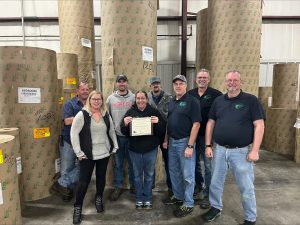
In 2023, Cortec® Coated Products (CCP) in Eau Claire, Wisconsin, received the Wisconsin Recycling Excellence Award from the Wisconsin Department of Natural Resources (DNR) in recognition of outstanding efforts to recycle and reduce waste.
In addition to sourcing most of our paper rolls from recycled content, our specialty at CCP is to apply a corrosion inhibiting coating that does not compromise the paper's ability to be recycled after use. This is an important environmental benefit for manufacturers and distributors that use Cortec® VpCI® Paper to package and protect metal parts in a variety of industries.
It is also an advantage for our waste handling processes at CCP. Converting our coated VpCI® Papers into marketable rolls and different sizes of sheeting inevitably leaves behind a large amount of paper scrap. Our employees at CCP collect the scrap, compact it into bales, and send it to a recycling broker that sorts and resells the scrap to various paper/recycling plants which channel the scrap back into the supply chain as raw materials for finished goods. We estimate that over the five-year period from 2021-2025, CCP has recycled 317 tons of paper, equal to approximately 5,000 trees saved.
Responsible Hazardous Waste Disposal and Local Reinvestment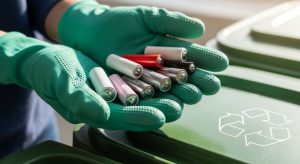
What does Cortec® do with old batteries, light bulbs, and oil after use? Do they just end up in the hazardous waste stream? No. Cortec® takes care to send these discarded materials to local companies that repurpose them back into the supply chain, simultaneously creating jobs that support the local community.
Old light bulbs and batteries go to Recycle Technologies (Blaine, Minnesota) and First Choice Computer Recycling (Eau Claire, Wisconsin). Both facilities are close enough to our four Midwest plants that we do not have to arrange for third-party transportation. Waste that goes to these repurposing facilities is broken down into its most basic components (e.g., plastic, cadmium, nickel, lithium, etc.) and fed back into the supply chain, reducing the need to mine virgin materials. Used oil goes to Eastside Oil to be refined and sold to new customers, helping the circular economy function with responsible recapturing and reuse of materials that might otherwise end up as hazardous waste.
VpCI® Film Recycling Partnership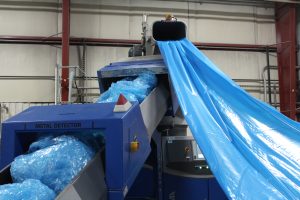
Cortec® has been a long-time proponent of reducing waste by recycling VpCI® film scrap. As early as the 1990s, Cortec® was experimenting with this concept, which led to a patent on the use of recycled resin in VCI film. In 2014, Cortec® Advanced Films (CAF) invested in a reprocessing machine to transform film scrap (PIR, or post-industrial recycled content), a natural byproduct of film production, into reusable resin. In 2016, NACE (now AMPP) published Cortec's white paper (No. 7283) outlining the successful incorporation of up to 20% in-house recycled content ("repro"). In 2017, CAF took a major step toward incorporating PCR (post-consumer recycled content) into its production stream by receiving used VpCI®-126 bags from a global manufacturer for in-house recycling. This opened an important door for Cortec® customers to become VpCI® film recycling partners, helping them systematically reduce plastic waste by diverting scrap and used films from the landfill. Since starting the film recycling program, Cortec® recycling customers have diverted hundreds of thousands of pounds of PCR or PIR back to Cortec® for repurposing into new corrosion inhibiting material. CAF's European counterpart, EcoCortec®, has also launched a similar recycling program, most notably working with Jacob Schober to implement a recycling concept which received a German packaging award in 2025.
As of 2025, CAF incorporates PIR into all VpCI®-126 film at a minimum of 10%. VpCI®-126 film with up to 30% PCR is available upon request at both CAF and EcoCortec® plants, making it possible for customers to meet increasing recycled content demands around the world or voluntarily reduce their use of virgin plastic to improve their environmental footprint.
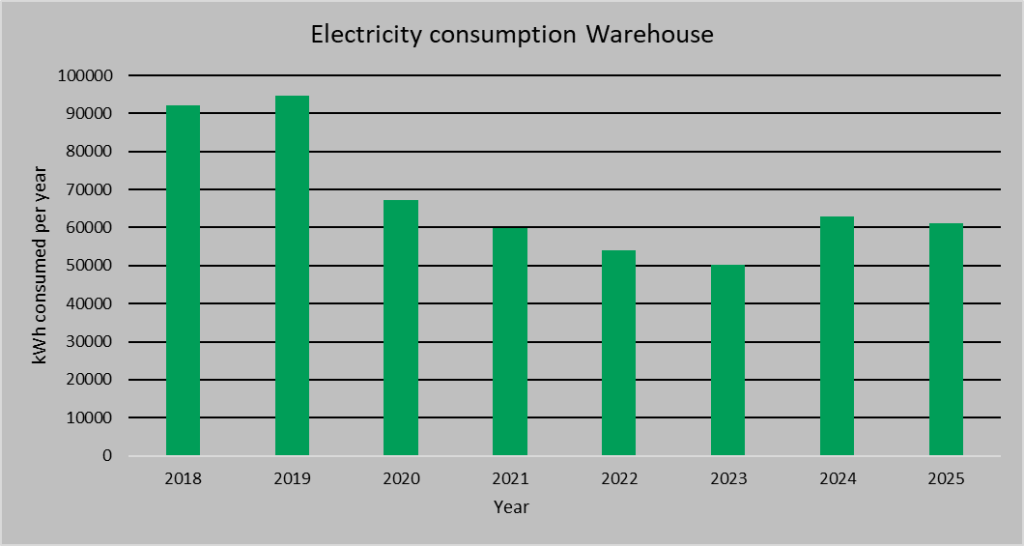
 Cortec® has implemented motion activated LED lights in our finished goods warehouse to help save on electricity and cut back on our overall carbon emissions. These motion-activated LEDs have reduced our usage by 85,560 kWh in the last four years since their installation compared to the previous four years. Looking at the data from 2018-2021 (before LEDs) and 2022-2025 (after LEDs), the average monthly consumption of electricity changed from 6,540 kWh per month to 4,757.5 kWh per month, respectively. This is a 27.26% reduction in consumption over the lifetime of the LEDs.
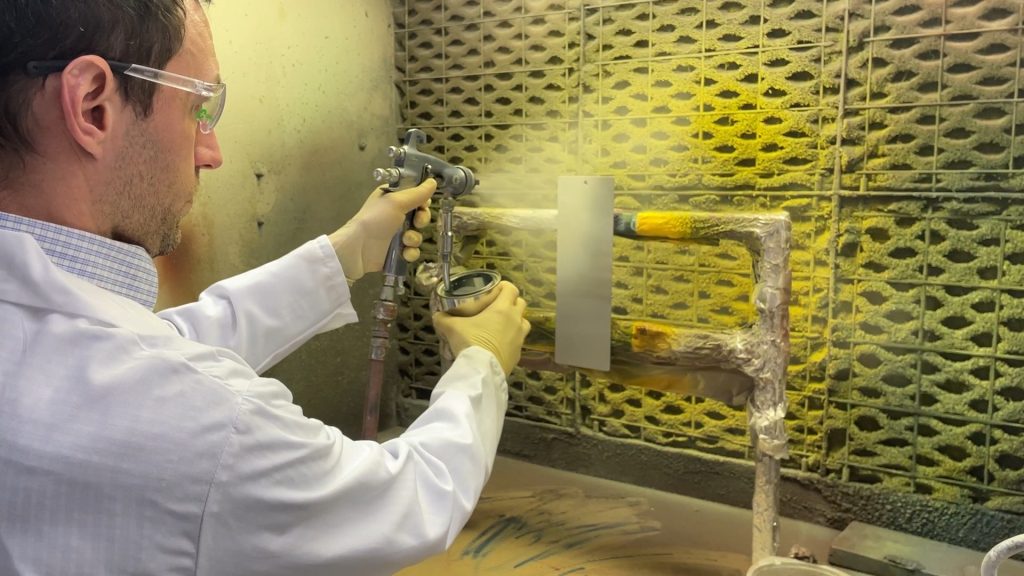
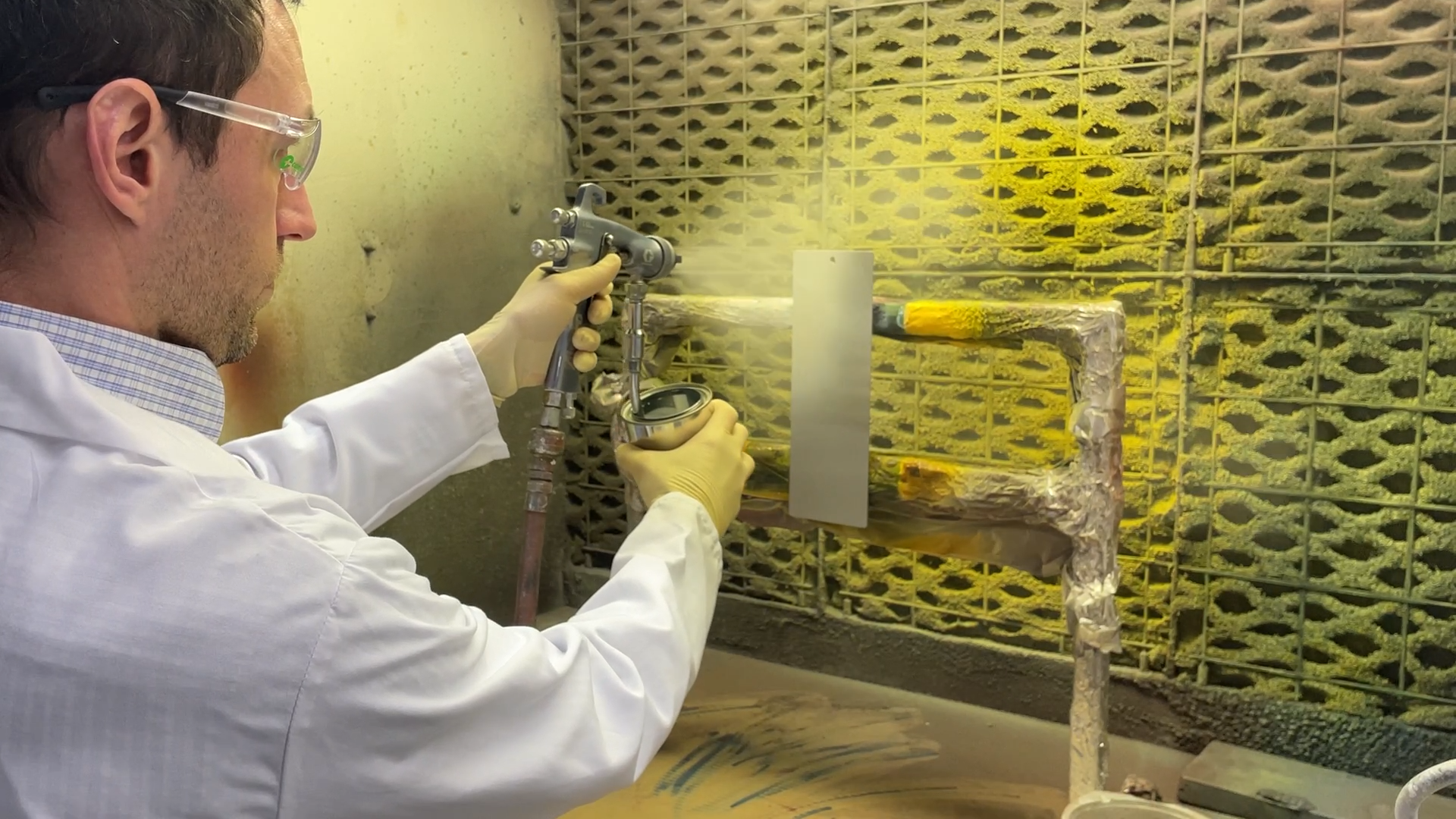
At Cortec®, we place a high priority on minimizing VOC (volatile organic compound) content in our coatings. Our water-based anticorrosion coatings especially shine in this area. Cortec® R&D carefully selects its complex package of corrosion inhibitors and coatings chemistry for synergistic performance and the lowest possible impact on environmental health and safety, including lower VOC levels than traditional industrial paints. By holding ourselves to very high standards of VOC content, we often achieve VOC levels that are much lower than industry requirements and closer to those of the house paint market.
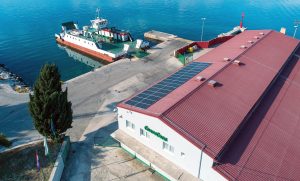
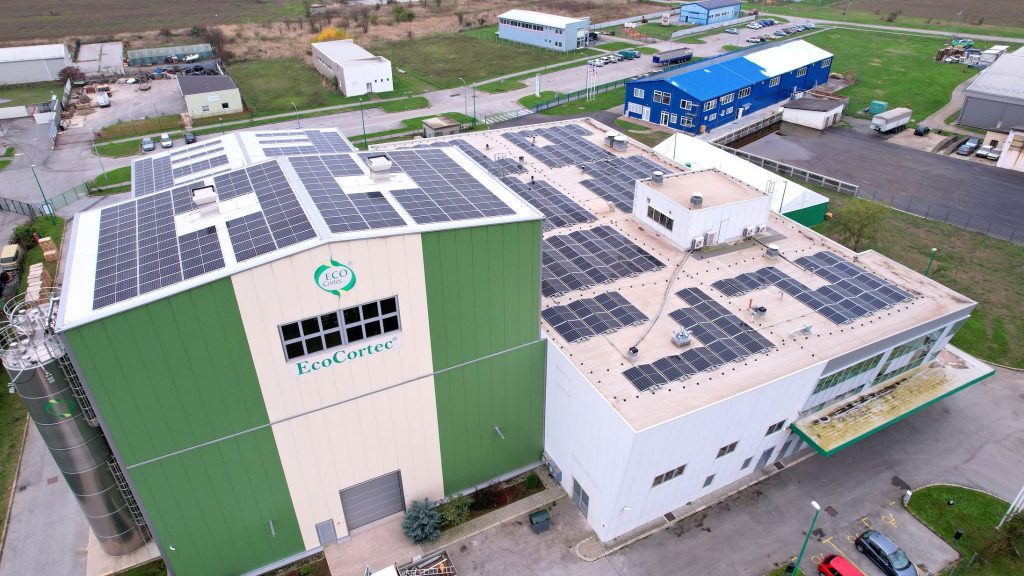
The Cortec® family of companies is also taking advantage of renewable energy, especially in Croatia where the Mediterranean region creates an optimal environment for solar power. In 2022, CorteCros®, on the coastal port of Split, installed solar panels that support a large share of the facility's energy needs and contribute to energy cost savings. Farther inland, EcoCortec® installed solar panels in 2023, providing the opportunity to diversify its source of power. Cortec® World Headquarters also gives a nod to renewable energy by investing a small percentage above and beyond its normal power bill to enable Connexus energy to build solar and wind fixtures that add renewable energy to the grid that supplies Cortec® and its neighbors.